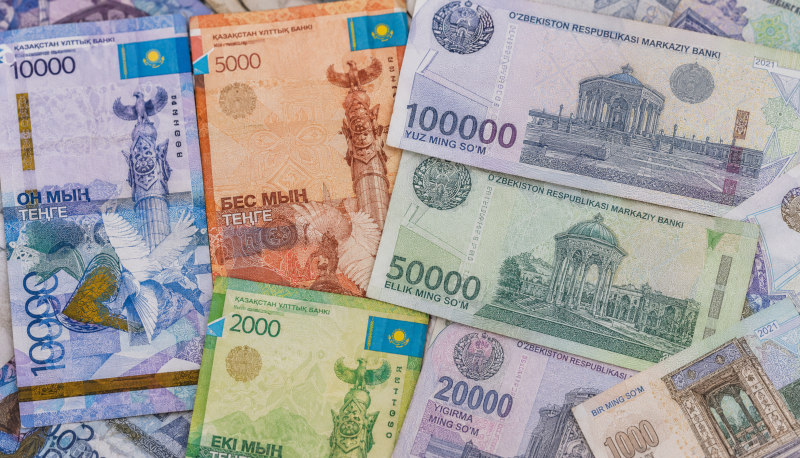
May 2026 could become a historic milestone for Central Asia: the region is preparing to list two major assets on global markets. Uzbekistan plans to offer up to a 30% stake in its National Investment Fund (portfolio of approximately $2.44 billion) on the London and Tashkent stock exchanges, while funds such as BlackRock, Franklin Resources, Redwheel, and the Allan & Gill Gray Foundation have already committed around $300 million. Almost simultaneously, Kazakhstan is preparing the IPO of its national railway operator KTZ, estimated at about $1 billion (a dual listing on KASE and an international exchange, with Hong Kong and London among the potential venues).
“International capital flows where there are predictable decisions, verifiable teams, and a clear positioning,” explains Marina Shabalina, founder and CEO of the international business reputation and strategic communications agency ADVES. According to her, over the past three years companies from Central Asia have significantly changed the nature of their dialogue with external markets.
Two Markets – One Challenge
Kazakhstan and Uzbekistan are approaching this stage from different starting points. Kazakhstan already has experience with public offerings: KazMunayGas, Air Astana, and Kazatomprom have gone through this process before. The Astana International Financial Centre (AIFC) and related infrastructure are developing in the capital. At the same time, the parameters of the KTZ IPO are still under discussion: the company is considering various international venues, including Hong Kong. The listing is expected no earlier than late 2026, with an offering of around 10–25% of shares while the state retains a controlling stake. The discussion around the IPO goes beyond corporate governance and touches on business model transformation: modernization of KTZ infrastructure, revision of tariff policy, and balancing debt load. Preparation for the IPO also involves strengthening the board of directors and increasing transparency – both necessary conditions for investor confidence.
For Uzbekistan, the current steps are largely precedent-setting. The country is steadily opening its economy to foreign capital and demonstrating strong momentum: in the first quarter of 2026, GDP growth reached 8.7%, and foreign investment inflows amounted to $13.7 billion. Uzum has already attracted investors through bond issuance, and the planned IPO of the National Investment Fund, with BlackRock’s participation, confirms that international interest in the country is real.
Both markets face a common challenge: strong economic performance does not eliminate the communication gap with international investors.
 Marina Shabalina (ADVES)
Shabalina added: “Strong economic indicators create a foundation, but they do not replace trust. In international markets, capital evaluates not only the asset but also the predictability of the team, transparency of decision-making, and the quality of communication. These factors directly affect the depth of demand and the final valuation of the business.”
Silence Has a Cost
In international deals, a passive communication strategy rarely contributes to business growth. Such an approach either reduces interest from institutional investors or directly impacts the company’s valuation.
“Traditional business culture in Central Asia prioritizes results and avoids publicity,” explains Marina Shabalina. “This worked within the region, but in international markets it creates a barrier.”
As the number of international deals grows, so does the demand from companies. Increasingly, the focus is not on reactive PR, but on building a comprehensive reputational position in advance–before entering new markets and starting negotiations. “Reputation is no longer a reactive tool; it becomes part of an investment growth strategy,” says the head of ADVES.
Top executives play a critical role in this process. International partners and investors assess not only business metrics but also the people making decisions. Limited public visibility of the management team increases uncertainty and raises perceived risk.
“Where a company remains silent, speculation speaks for it. And the more intense the competition for international capital, the more expensive this vacuum becomes—sometimes resulting in direct valuation losses,” she states.
Reputation as a Deal Prerequisite
According to her, the reputational infrastructure of a company entering international markets becomes an essential component alongside legal structure, auditing, and corporate governance. “Reputation is no longer a ‘soft asset.’ It is infrastructure, and international investors evaluate it just as carefully as financial performance and debt levels,” Shabalina observes.
However, openness should not mean uniformity. Central Asia represents pragmatism, economic momentum, and distinct identity. The challenge is to find the point where this uniqueness and international transparency work together.
“Template PR tools that were effective a few years ago are no longer sufficient: the ways people access information are changing. Generative models are becoming the first point of search, the importance of video formats and messaging platforms is growing–requiring work across multiple levels: corporate communications, personal brands of key figures, and management of the existing information landscape,” adds Marina Shabalina.
Strategy, Not Reaction
McKinsey identifies infrastructure as one of the most attractive asset classes for institutional investors over the next three years. The region is entering the market at the right moment – the question is how it will use it.
Business reputation in Central Asia is being shaped not for years, but for decades. Those who engage in this process consciously are defining not only the future of their companies, but also how international capital will perceive the entire region.
The head of ADVES concludes: “Companies that build reputation as a strategic asset gain an advantage regardless of market conditions. Those who delay risk finding that the market has already formed an opinion about them without their participation – and has factored it into their valuation.”
-
 26 April26.04The Karimova Case: A Trial Without the DefendantSwiss court opens proceedings against the daughter of Uzbekistan's former president — riddled with gaping procedural gaps
 -
 24 December24.12To Clean Up and to ZIYAWhat China Can Offer Central Asia in the “Green” Economy
 -
 23 December23.12PhotoTokyo DriveJapan to invest about $20 billion in projects across Central Asia over five years
 -
 17 December17.12Sake for SixCentral Asia’s Rapprochement with Japan Comes with Hidden Pitfalls
 -
 24 November24.11Here’s a New TurnRussian Scientists Revive the Plan to Irrigate Central Asia Using Siberian Rivers
 -
 17 September17.09Risky PartnershipWhy Dealing with China Is Harder Than It Seems at First Glance
-

A former State Tourism Committee official talks about a new project to attract foreign ideas and technologies
-

The Uzbek government has announced plans to help the public through the coronavirus crisis – with the main role falling to private business
-

Economists on how the combined oil crash/coronavirus crisis threatens Central Asia
-

The campaign to promote EAEU membership is underway in Uzbekistan