 Manuscript. Photo: cisc.uz
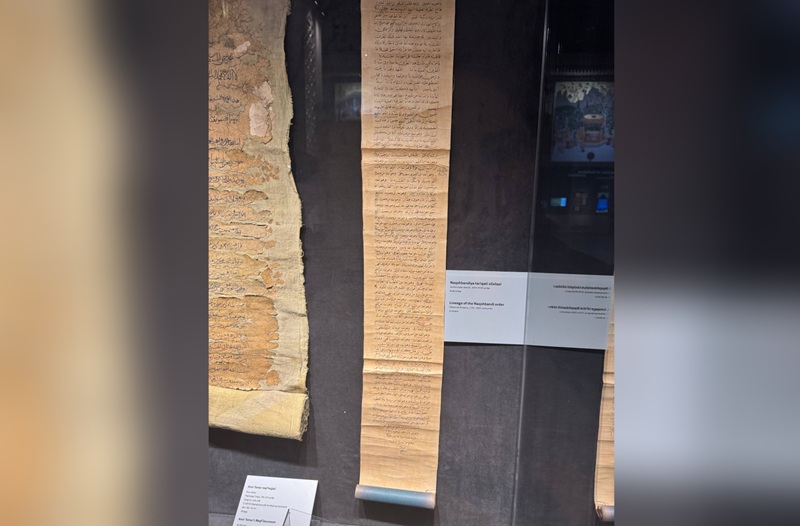
The museum collection of Uzbekistan’s Center for Islamic Civilization has been enriched with a rare 17th–18th century manuscript associated with the Naqshbandi Sufi order, the Center’s press service reported.
The artifact was acquired in the United Kingdom from the David Aaron Gallery, which specializes in Islamic art. The manuscript is currently housed in the museum’s First Renaissance Hall.
According to experts, the document dates to the Ottoman period and is written in Arabic. It records a spiritual genealogy (shajara) of the order’s mentors that, in accordance with Sufi tradition, traces its lineage back to the Prophet Muhammad. The chain includes prominent theologians and sheikhs such as Khoja Ahror, Yusuf Haqqi, and Khoja-i Kalan, as well as religious figures from Baghdad and Bukhara.
Khusraw Hamidov, a senior research fellow at the Center for Islamic Civilization, noted that the Naqshbandi order was distinguished by its practice of “silent dhikr” (the remembrance of God quietly or inwardly) and by the active engagement of its followers in public life.
“The genealogy, written in Arabic, begins with Hasan Razo’i Naqshbandi and leads back to the Messenger of God, the Prophet Muhammad. It is followed in the manuscript by texts devoted to the teachings of the order. The exact date of the document’s creation has not yet been established,” Hamidov explained.
He added that the representation of various regions in the lineage of spiritual mentors points to the wide spread of the order beyond Central Asia during the Ottoman era, when Sufi brotherhoods played a significant role in the social and political life of the Islamic world.
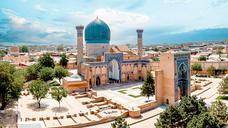
ℹ️ The Center for Islamic Civilization is being built in Tashkent near the Hast-Imam complex. Designed in the style of medieval architectural monuments, the building features four portals, each 34 meters high, and a central dome rising 65 meters. It includes a Hall of the Quran, a 460-seat conference hall, and a museum whose exhibitions span the entire history of Uzbekistan—from the pre-Islamic period to the present day. The Center is intended as a platform for studying ancestral heritage and reinterpreting it in contemporary terms, in cooperation with the International Islamic Academy of Uzbekistan and research and educational centers worldwide. The opening is scheduled for spring 2026.