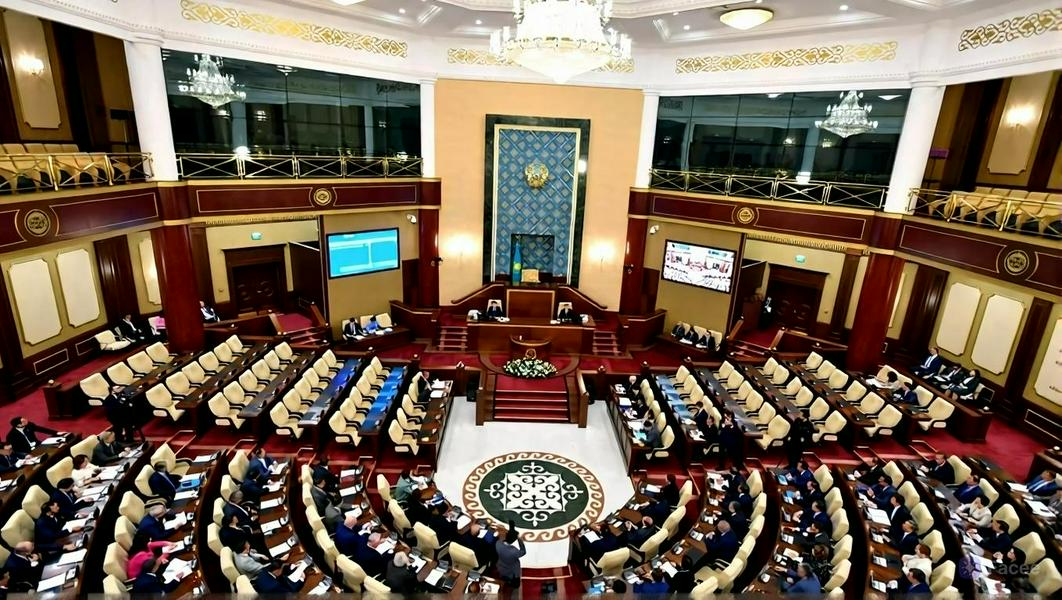
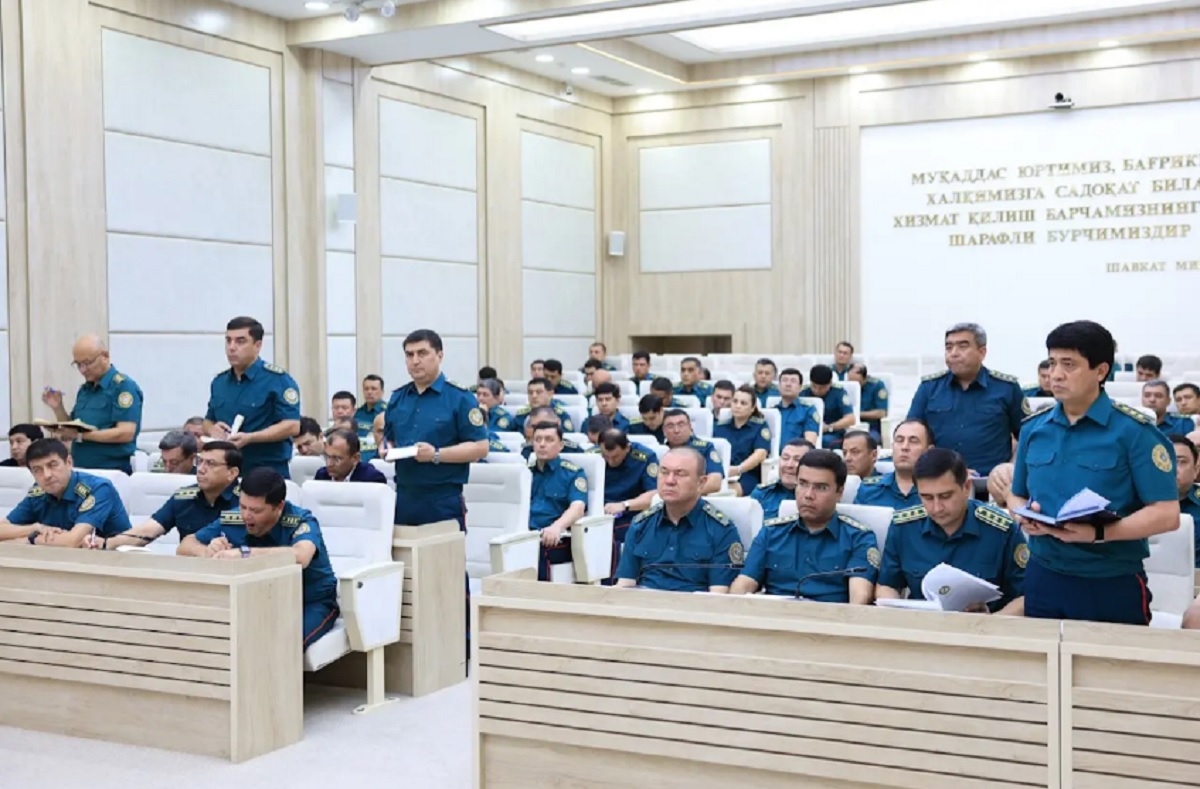
 At a board meeting Photo courtesy of the press service of Uzbekistan's Interior Ministry
Uzbekistan's Interior Ministry prevented the illegal outflow of 29 trillion soums ($2.4 billion) from the country in the first half of 2026 and blocked more than 18,800 suspicious bank cards, the ministry's press service reported. The results were made possible by a dedicated system developed jointly with the republic's Central Bank.
The figures were presented in a report on the ministry's performance over the first two quarters of the year at a board meeting chaired by Interior Minister Aziz Tashpulatov.
With 2026 declared the «Year of Combating Cybercrime» within the agency, this area received particular attention. Over the reporting period, Uzbek law enforcement solved more than 9,200 cybercrimes that had caused financial losses to over 13,000 citizens. Victims were compensated for material damages totaling about 120.5 billion soums ($10.1 million).
Public-awareness campaigns were also carried out, though the ministry's leadership criticized subordinates for paying insufficient attention to this work. Officials stressed the need for a closer study of public appeals, deeper analysis of the causes of cybercrime and the factors enabling it, and further training for internal affairs officers in the field.
The meeting also reviewed other areas of the ministry's work. In the first half of the year, more than 125,000 mass events were held across Uzbekistan, with police ensuring the safety of 70 million attendees. During the same period, 87% of crimes were prevented — a figure the press service cited as evidence of an effective forecasting mechanism. More than 5,000 people on wanted lists were detained, and about 2,600 citizens previously considered missing were found and returned to their families.
Shortcomings were addressed as well. According to the ministry's data, 476 mahallas (neighborhood communities) remain in the «red» category of the territorial crime-situation assessment. Of more than 205,000 public appeals to the authorities, about 88% of complaints were resolved, while only 0.9% were left unaddressed on grounds established by law.
Following the board meeting, the ministry dismissed six heads of city and district internal affairs bodies, along with several other employees, «for serious shortcomings in stabilizing the crime situation in the republic.» A number of other officers faced disciplinary action, while the heads of territorial departments with the best crime-prevention results received commendations.