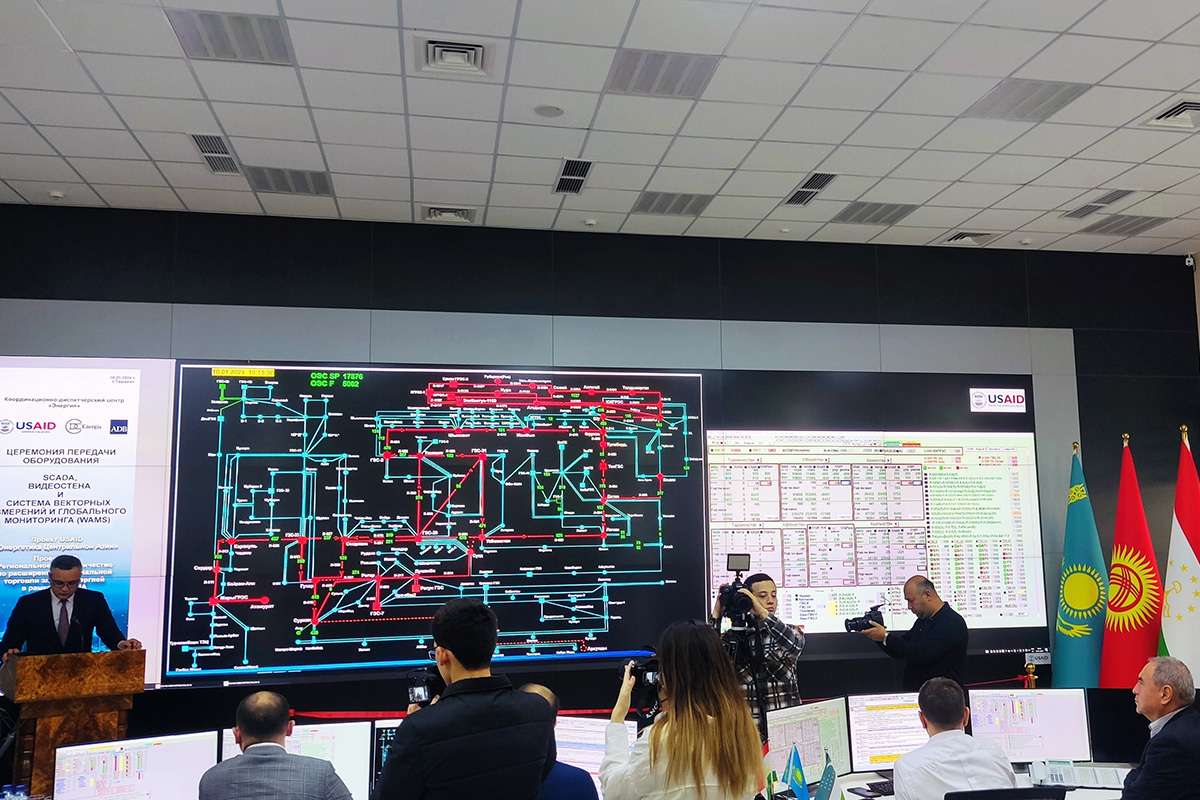
 Energia Dispatch Center. Photo via spot.uz
Kazakhstan, Kyrgyzstan, Tajikistan, and Uzbekistan are preparing to launch a unified electricity trading platform. The first transactions on the new regional market could take place in late 2028 or early 2029, reports Kazakhstan's electricity grid operating company KEGOC.
The Tashkent-based Energia Coordination Dispatch Center has announced an international tender to select a company that will establish trading rules, create an electronic platform, and set up pricing and settlement mechanisms among participants. Bids will be accepted through November 30 of this year.
The new market will operate on a day-ahead basis, allowing utility companies to schedule power purchases and sales for specific hours of the following day. For example, during a power shortage, Kyrgyzstan will be able to buy electricity from a neighboring country with spare capacity. In turn, Bishkek will be able to sell surplus power to other market participants.
Market clearing prices will reflect bids and offers, accounting for supply, demand, and cross-border transmission capacity. Settlements will initially be conducted in US dollars. Existing bilateral supply agreements will remain in effect, while the new trading platform will serve as an additional mechanism for resource exchange.
System development and deployment are tentatively scheduled to begin in May 2027. The project timeline allocates 18 months for these tasks, after which the selected contractor will support market operations for another two years. The participating nations will subsequently determine a permanent governance model.
Trading will initially be restricted to national power companies, single electricity buyers, and system operators, with each country defining its own pool of participants. Turkmenistan, which also possesses substantial power-generation capacity, will not join the initiative during its initial phase.
The common market is being established under the World Bank-backed 10-year REMIT program. In January 2026, Fergana reported that the international financial institution had agreed to allocate roughly $1.018 billion toward the integration of Central Asian power systems, including $143.2 million for the first phase. The bank estimates that cross-border trade currently accounts for only about 3% of total regional electricity demand, despite the fact that hydropower potential in Kyrgyzstan and Tajikistan effectively complements thermal generation in Kazakhstan and Uzbekistan. The program aims to increase regional trade to 15 billion kilowatt-hours per year and expand cross-border grid transmission capacity to 16 gigawatts.
Meanwhile, the region is also implementing the $1.2 billion CASA-1000 energy project to export surplus power from Kyrgyzstan and Tajikistan to Afghanistan and Pakistan, targeting annual deliveries of 4.6 billion kilowatt-hours. Construction in Kyrgyzstan, Tajikistan, and Pakistan is largely complete, but commissioning remains delayed due to an idle power line section across Afghanistan, scheduled for completion by the end of 2027.