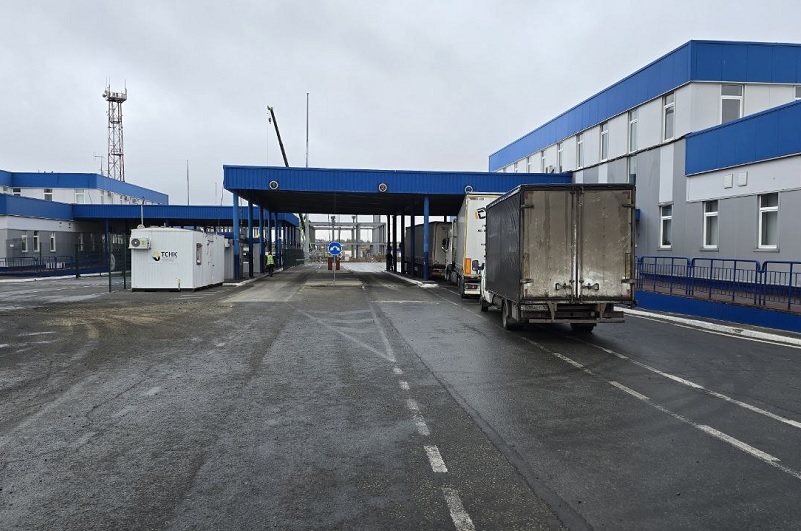
 Photo: t.me/customs_rf
Russian President Vladimir Putin has signed a decree allowing goods from Kazakhstan and Kyrgyzstan to continue entering Russia without labeling and without documents confirming their origin within the Eurasian Economic Union for an additional two weeks. The previous decree was valid until December 10; the new one expires on December 25.
The measure applies to goods transported by road across the Russian-Kazakh border. The relaxation is valid under several conditions. First, the recipient must be a Russian legal entity. The carrier must submit to the Russian customs authorities a notice from the recipient pledging to declare the goods (the notice may be provided in simple written form).
Second, the goods must be brought to a temporary storage warehouse, labeled, and declared by December 27.
Moscow introduced the simplified procedure for cargo crossing the Russian-Kazakh border at the end of October. The Russian authorities sought to address a major logistical collapse at the border, which had nearly halted the western route for cargo deliveries from China to Russia.
Since mid-September, multi-kilometer lines of trucks have been accumulating at the Kazakhstan–Russia border. Industry participants immediately described the congestion as unprecedented: on various days, between 2,500 and 15,000 trucks were stuck. Customs agencies in both countries blamed each other for the situation.
The Russian Federal Customs Service ultimately stated that the main problem was unscrupulous business operators. According to the agency, some truck drivers who intended to bring in goods with violations delayed crossing the border to avoid inspections and awaited further instructions from cargo owners.
Kazakh officials, meanwhile, attributed the crisis to heightened Russian customs controls.