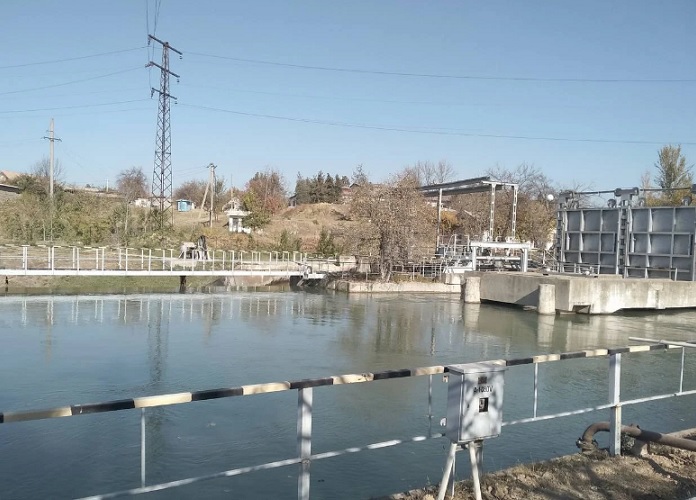
 Hydropower facility in Uzbekistan. Photo: mytashkent.uz.
Uzbekistan’s state-owned company Uzbekhydroenergo has held talks with several Chinese corporations and signed agreements on the modernization of hydropower plants (HPPs) and the introduction of modern technologies using artificial intelligence at such facilities.
According to Uzbekhydroenergo’s press service, the Chinese company TBEA will upgrade three facilities that are part of the Lower Bozsu cascade of hydropower plants in Tashkent Region.
The Chinese contractor won the tender and will carry out the modernization on a turnkey basis. As a result, the total capacity of the facilities will increase from 27.4 megawatts to 32.4 MW, enabling an additional 52.8 million kWh of electricity generation. This is expected to supply more than 21,000 households. In addition, the state will save 17 million cubic meters of natural gas and over 40,000 tons of coal annually.
Uzbekhydroenergo also reported the signing of agreements on strategic cooperation with the Chinese corporation Sinohydro, which likewise secured the contract after winning an open tender.
Chinese specialists will implement a project to modernize the Shahrihan cascade of hydropower plants in Andijan Region. The agreement provides for full construction works, the supply of technological equipment, and its commissioning.
The facility’s capacity is expected to grow from 7.6 MW to 16.4 MW, while annual generation will reach 33 million kWh, enough to meet the needs of 13,000 households. Savings are projected at 11 million cubic meters of gas and 27,500 tons of coal.
The press service also reported separate talks with China Huaneng Group, which ranks third in the world in electricity production and is a leader in China.
During the discussions, the Chinese side proposed initiatives focused on deploying artificial intelligence technologies, digitalizing processes, and improving the efficiency of energy facility management. In particular, this includes the “smart hydropower plant” concept, which envisions the broad adoption of modern IT solutions and AI.
Priority areas for cooperation also include continuous monitoring within early-warning safety systems for hydraulic structures and dams, full digitalization of production processes at hydropower plants, automation of control systems, and centralized real-time dispatch control.
The Uzbek side also agreed on internships for specialists in China. Uzbekhydroenergo employees are expected to study advanced practices and upgrade their qualifications, including hands-on exposure to AI-based management systems and related processes.