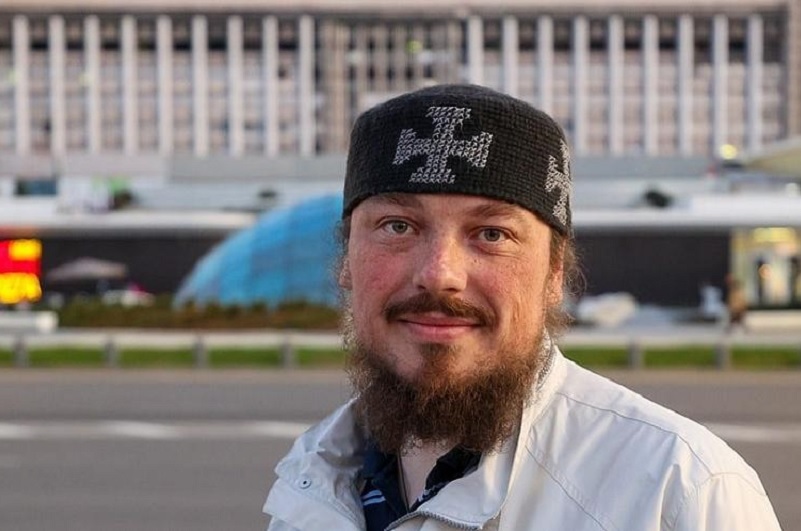
 Photo from kaztag.kz
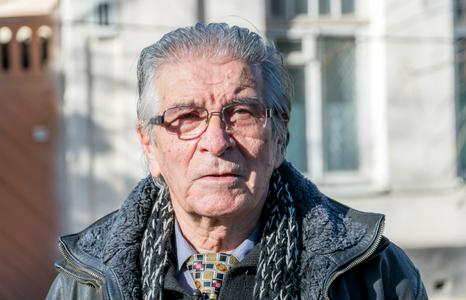
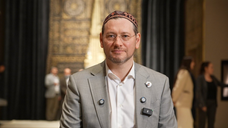
Former priest of the Russian Orthodox Church Iakov Vorontsov, who ранее reported pressure over his attempt to establish an Orthodox church in Kazakhstan independent of the Moscow Patriarchate, completed a 10-day administrative arrest today but was not released, KazTAG reports.
According to his lawyer, Galym Nurpeisov, on the morning of February 23 Vorontsov was detained for 72 hours as a suspect in a criminal case. A preventive measure is expected to be determined in the near future. He faces charges under two articles of Kazakhstan’s Criminal Code — Article 302 (maintaining a drug den) and Article 296 (possession of narcotics without intent to sell).
Vorontsov is a former hieromonk of the Astana and Almaty diocese of the Russian Orthodox Church. After criticizing Russia’s special military operation in Ukraine as well as the leadership of the Russian Orthodox Church, he was suspended from ministry and defrocked.
The former priest was first detained in Almaty on February 13 following a nighttime search conducted by police officers and special forces. An unspecified powder was allegedly found in his home. Police accused Vorontsov of using non-medical narcotic substances, and a court sentenced him to 10 days of administrative arrest. Later, police announced that a criminal investigation had been launched into allegations that the former priest had organized a drug den.
“There has never been any kind of drug den in my home. (…) The powder found in my house does not belong to me. I believe it was planted in order to punish and discredit me. It is not difficult to guess who benefits from this and who might be behind it. Everyone knows who publicly discredited me with lies and slander. Everyone knows who publicly called for criminal prosecution against me,” Vorontsov wrote in a letter from detention, which his supporters published on social media.
In recent years, Vorontsov repeatedly attempted to register a new religious association — a church not subordinate to the Moscow Patriarchate — with Kazakhstan’s Ministry of Justice but was denied each time. Shortly before his arrest, it became known that he had challenged that decision in court.