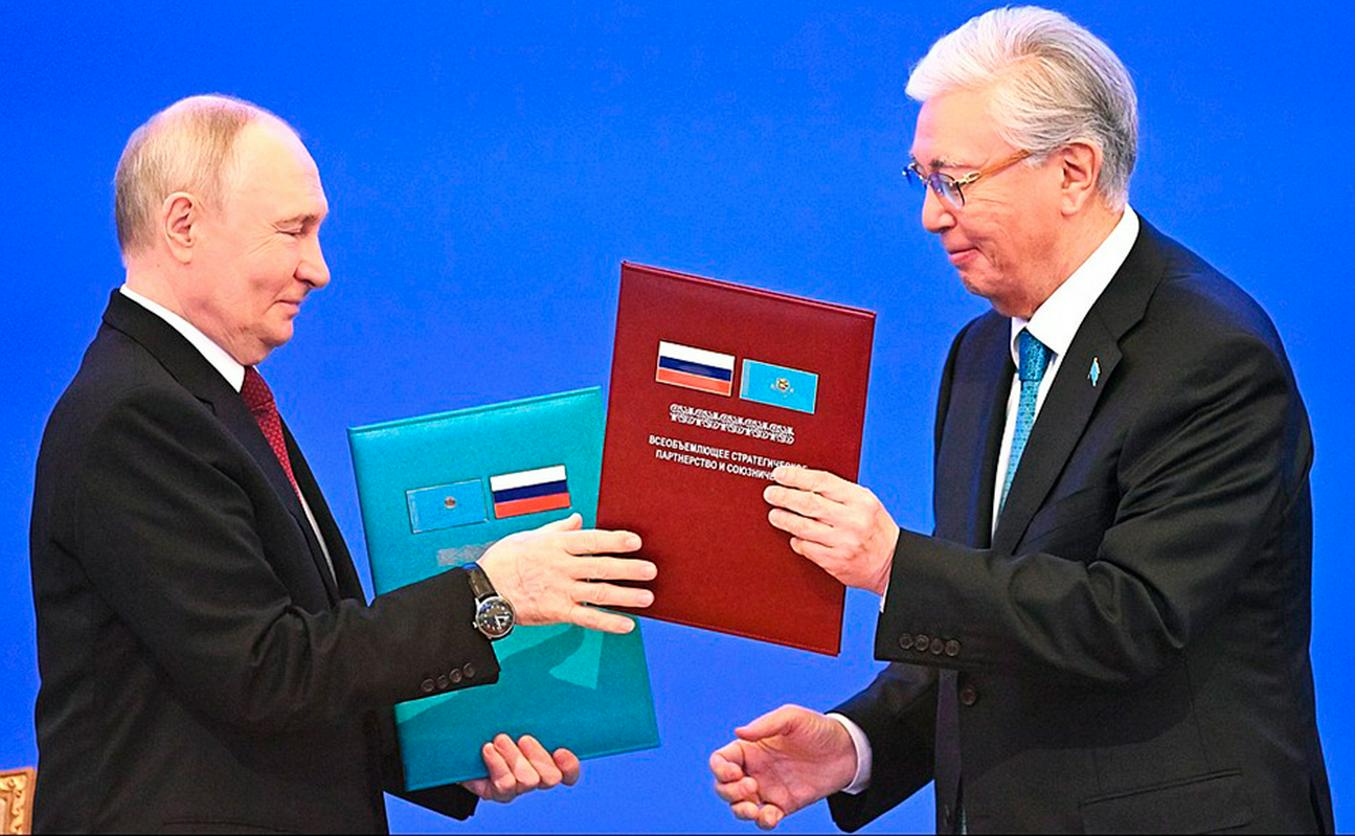
Russia and Kazakhstan signed agreements on May 28 outlining the basic principles and financing terms for the construction of the Balkhash nuclear power plant (NPP), including a Russian state export credit to fund the bulk of the project. The documents were inked in Astana during Russian President Vladimir Putin's state visit, the Kremlin confirmed.
The agreements were signed by Almasadam Satkaliyev, Chairman of Kazakhstan's Atomic Energy Agency, and Alexey Likhachev, Director General of the state nuclear corporation Rosatom.
While the agreements' full details were not disclosed, Likhachev indicated the Russian loan would cover «the majority of capital investment, but not all of it — part will remain with the Kazakh side.» In April, Satkaliyev had specified that Russia's share would amount to 85% of total financing, with Kazakhstan's government covering the remaining 15%. He initially put the project's preliminary cost at around $15 billion for two power units of 1,200 MW each. By May, that estimate had been revised upward to at least $16.5 billion.
The Balkhash NPP — Kazakhstan's first nuclear power plant — will be built near the village of Ulken on Lake Balkhash in the Almaty region. Construction is expected to take roughly a decade, with the first unit potentially coming online in 2034. Preparatory research work began on August 8, 2025.
The nuclear deal was among 15 documents signed during Putin's visit, which also included a joint presidential statement on «seven foundations of friendship and good neighborliness» between the two nations, as well as an agreement on expanded cooperation in the oil sector. Putin's state visit, timed to coincide with the Eurasian Economic Union (EAEU) summit, runs from May 27 to 29.