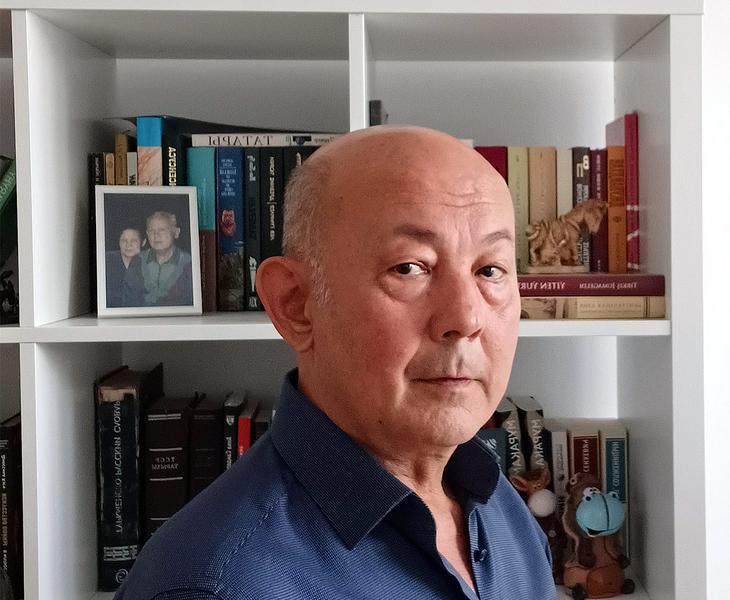
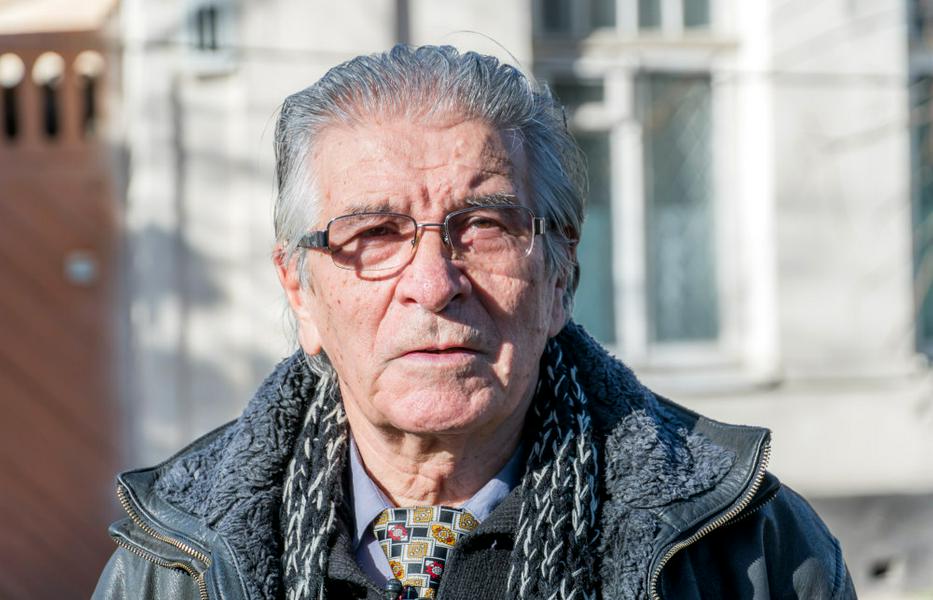
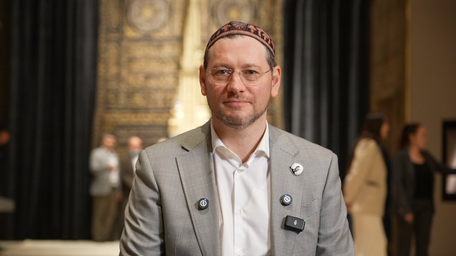
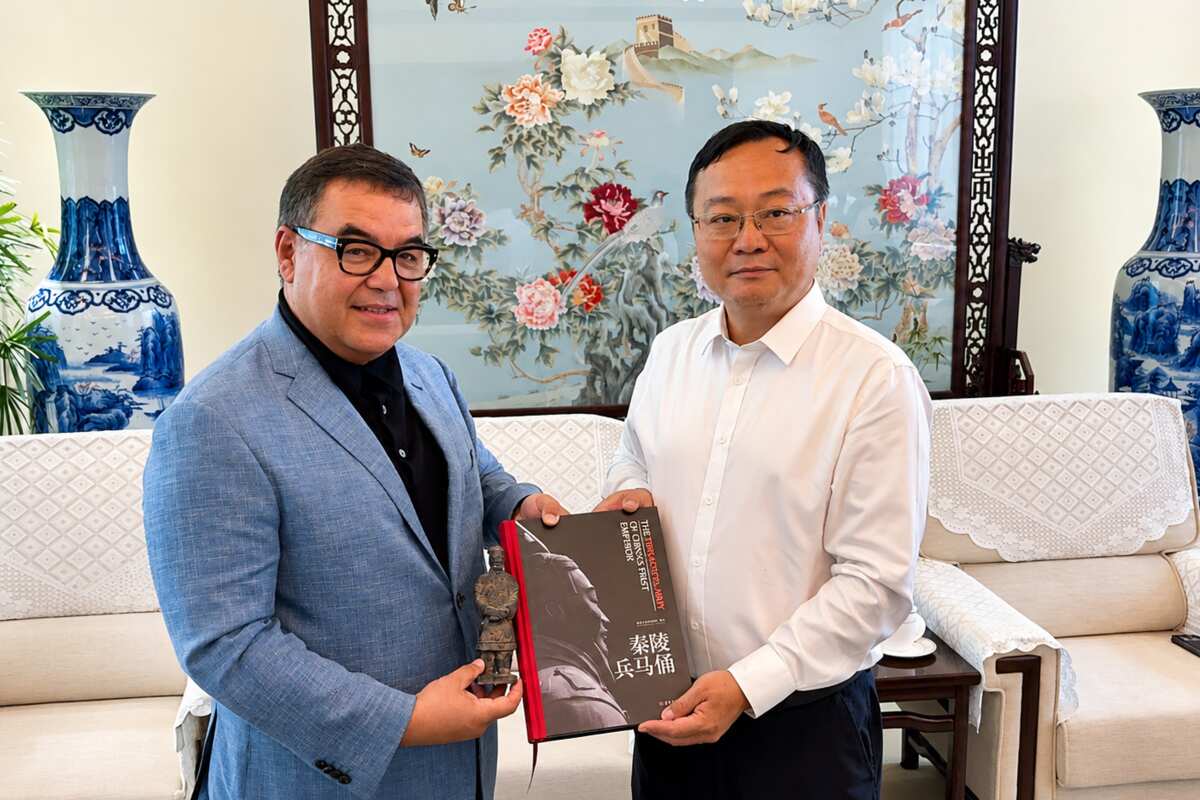
 Firdavs Abdukhalikov and Li Gang Photo: press service of the CIC
The Center for Islamic Civilization in Uzbekistan has discussed potential cooperation with the Shaanxi Provincial History Museum and the Mausoleum Museum of Emperor Qin Shi Huang, the Center’s press service reported.
The talks took place during a visit to China by a Center delegation headed by Director Firdavs Abdukhalikov.
At the Shaanxi Provincial History Museum, the two sides discussed joint exhibitions and research, specialist exchanges, and the preparation of books and museum catalogs. One potential project involves displaying a Chinese archaeological collection in Uzbekistan.
The Shaanxi Provincial History Museum holds one of China’s largest archaeological collections, much of it related to the history of the Great Silk Road. The museum welcomed more than 5.2 million visitors in 2025.
The Uzbek delegation also visited the Mausoleum Museum of Emperor Qin Shi Huang and held talks with its curator, Professor Li Gang. The two sides explored opportunities for exhibitions and joint research, as well as exchanges of museum specialists and expertise in conserving archaeological finds.
The museum complex houses the famous Terracotta Army, comprising more than 8,100 figures of warriors, horses, and chariots created in the third century BC. The complex is included on the UNESCO World Heritage List.
Abdukhalikov noted that Uzbekistan and China share centuries of history and the common heritage of the Great Silk Road. He said joint exhibitions, research, and specialist exchanges could take cultural cooperation between the two countries to a new level.
Some of the projects could be implemented in 2027, marking the 35th anniversary of diplomatic relations between Uzbekistan and the People’s Republic of China.
The Center for Islamic Civilization was built in the Uzbek capital next to the Khast-Imam complex. Designed in the style of medieval architectural monuments, the building features four 34-meter-high portals and a central dome rising 65 meters. It houses a Quran hall, a 550-seat conference hall, and a museum whose exhibitions span the history of Uzbekistan from pre-Islamic times to the present day.
The Center is intended to serve as a platform for studying and interpreting the country’s ancestral heritage in cooperation with the International Islamic Academy of Uzbekistan and research and educational institutions worldwide.