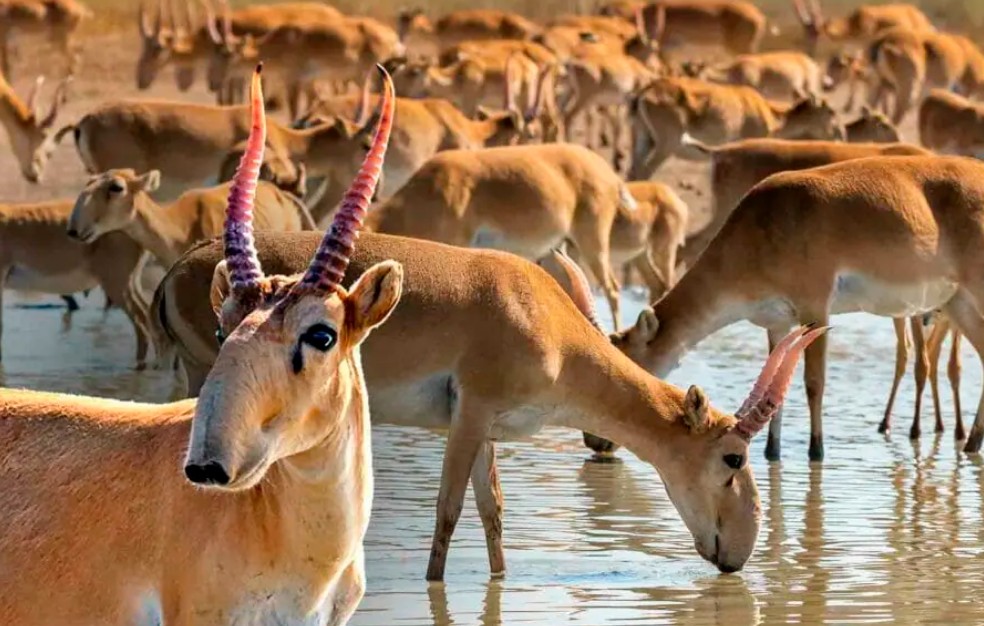
 Saiga antelopes. Photo: shutterstock.com
Kazakhstan, where authorities conduct mass culls of saiga antelopes, has agreed with Uzbekistan to help rebuild the animal's population there, Kazakhstan's Ministry of Ecology and Natural Resources announced.
The memorandum was signed by Kazakh Ecology Minister Alibek Kuantyrov and Aziz Abdukhakimov, head of Uzbekistan's National Committee on Ecology and Climate Change.
The agreement provides for joint monitoring of saiga numbers, migration patterns, and health status, alongside scientific data exchanges, satellite tracking, and veterinary surveillance. The two nations also plan to rehabilitate natural grazing lands, watering sites, and transboundary migration corridors while stepping up efforts against poaching and the illegal wildlife trade.
A core focus of the partnership will be saiga reintroduction—returning the animals to their historic habitats through planned relocations.
The initiative has been in the works for several years. In July 2025, Uzbekistan announced plans for a memorandum with Kazakhstan, with Abdukhakimov voicing intentions to translocate roughly 500 young saigas to the country. Formal wildlife conservation cooperation between the two states dates back even further, established under an intergovernmental agreement signed in March 2010.
The urgency to rebuild Uzbekistan's herds stems from a stark cross-border disparity. According to spring 2026 census data, Kazakhstan was home to 4.689 million saigas—a 17.9% jump from the previous year. That count included roughly 2.7 million in the Ural population, 1.87 million in the Betpak-Dala herd, and just 119,000 in the Ustyurt population, which historically migrated between the two neighboring countries.
Uzbekistan faces a far more critical situation. Data released by the republic's environmental ministry in April 2025 estimated resident saiga groups in the Aral Sea basin and on the desiccated seabed at just around 200 individuals. Since 1990, the country's saiga numbers have collapsed by 99.5%.
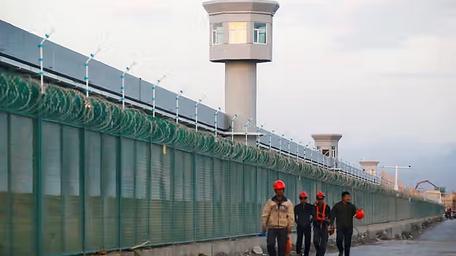
Disrupted migration routes played a major role in the decline. The construction of the Shalkar–Beyneu railway in Kazakhstan, completed in 2015, alongside border fencing, severely impeded saiga movements across frontiers. According to experts from the UN Convention on the Conservation of Migratory Species of Wild Animals, the Ustyurt herd has effectively lost access to its traditional winter pastures in Uzbekistan.
The two sides revisited plans to return saigas to Uzbekistan in October 2026 at the UN Biodiversity Conference in Yerevan, where delegations agreed to hammer out practical arrangements for animal translocations.
The memorandum signed in November specifies neither a timeline nor the exact number of antelopes slated for transfer. It also remains unclear what specific steps will be taken to dismantle barriers along migration routes or how much funding the project will require.
ℹ️ Kazakhstan has actively managed its largest saiga herds for several years, arguing that culls are necessary to safeguard agricultural lands. As Fergana previously reported, authorities culled around 196,000 animals between July and November 2025, transferring the meat to commercial processing plants. The cull continued in 2026: according to the republic's Forestry and Wildlife Committee, hunters had culled nearly 47,000 additional saigas by September 28.