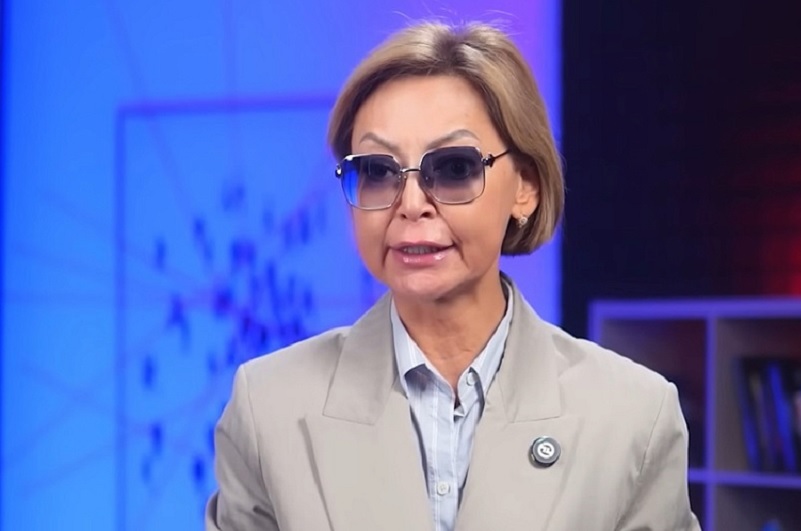
 Gulnara Bazhkenova. Video still
Gulnara Bazhkenova, editor-in-chief of ORDA.kz, has been placed under house arrest for two months. The decision was issued on the evening of December 1 by an investigative judge, according to the outlet’s lawyer, Murat Adam, who announced it on Facebook (a social network banned in Russia; Meta, its parent company, is designated as extremist in the Russian Federation).
Earlier, police reported that several criminal cases had been opened against Bazhkenova for “spreading false information.” On the morning of December 1, searches were carried out at the ORDA.kz newsroom in Almaty and at Bazhkenova’s apartment.
According to the outlet’s lawyer Olga Didenko, at 9:26 a.m. local time, a large investigative team — including numerous witnesses, investigators, and armed security officers — entered the newsroom. They inspected offices and seized documents and equipment. Journalists also reported that both the editor-in-chief and the accountant were subjected to “personal searches.” In the Almaty office, a safe in Bazhkenova’s office was broken open, and cash from the staff salary fund was taken, the outlet’s Telegram channel said.
The editorial team’s lawyer and legal counsel, both holding proper authorization, were not allowed inside and were unable to review the search warrant, according to the international press freedom foundation “Әділ сөз.” At the same time in Astana, police forcibly took Dmitry Kim, head of the outlet’s local bureau, in for questioning after conducting investigative actions at his home as well.
“Given the high public importance of media outlets and the wide visibility of editor-in-chief Gulnara Bazhkenova, the lack of clear information on the pretrial investigation, as well as statements about possible legal violations during the investigative actions, demand an immediate response from the police and the prosecutor’s office,” the foundation stated.
The organization called for full transparency in investigative procedures, respect for journalists’ rights, and the prevention of any actions that could be viewed as pressure on freedom of expression.