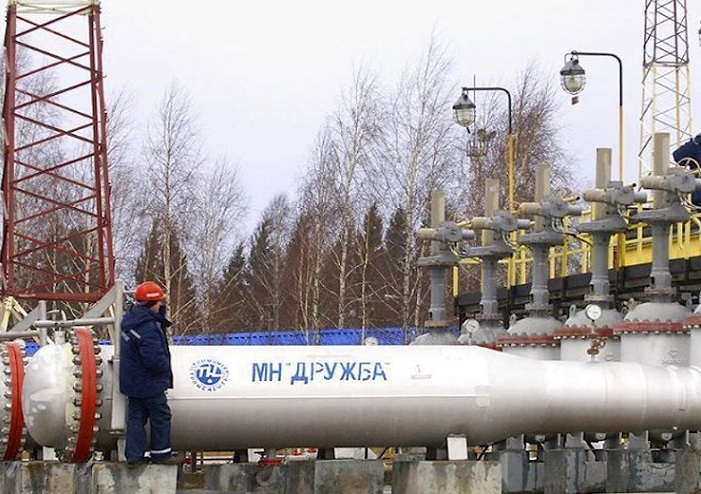
Russia plans to halt the transit of Kazakh oil to Germany through the Kremlin-controlled Druzhba pipeline starting May 1, Reuters reported Tuesday, citing three industry sources familiar with the matter.
The sources, who spoke on condition of anonymity, said Russian authorities have already forwarded a revised oil transit schedule to the relevant agencies in Kazakhstan and Germany.
Russia's Energy Ministry had not responded to a request for comment at the time of publication. Kremlin spokesman Dmitry Peskov told reporters at his daily briefing that he was unaware of any plans to suspend crude supplies via Druzhba, but said he would look into the matter.
Reuters noted that Russia supplied oil to Germany via the pipeline for decades, including to the country's largest refinery in Schwedt. Following Russia's invasion of Ukraine, bilateral relations deteriorated sharply, and German authorities assumed management of the Schwedt facility — previously controlled by Russian energy giant Rosneft — though the Druzhba pipeline has remained operational, carrying Kazakh crude to European markets.
Kazakhstan exported more than 2.1 million tons of oil to Germany via the route in 2025, equivalent to roughly 43,000 barrels per day — a 44% increase on the 2024 figure. Pipeline operations, however, have been repeatedly disrupted by Ukrainian drone strikes targeting sections of the infrastructure on Russian territory.
In the first quarter of this year, Kazakh oil exports to Germany rose by 353,000 tons to 730,000 tons, according to national pipeline operator KazTransOil. Astana had planned to ship up to 2.5 million tons to Germany in 2026 in total. Analysts warn that a potential suspension of transit could deal a significant blow to one of Kazakhstan's most important crude export corridors into Europe.