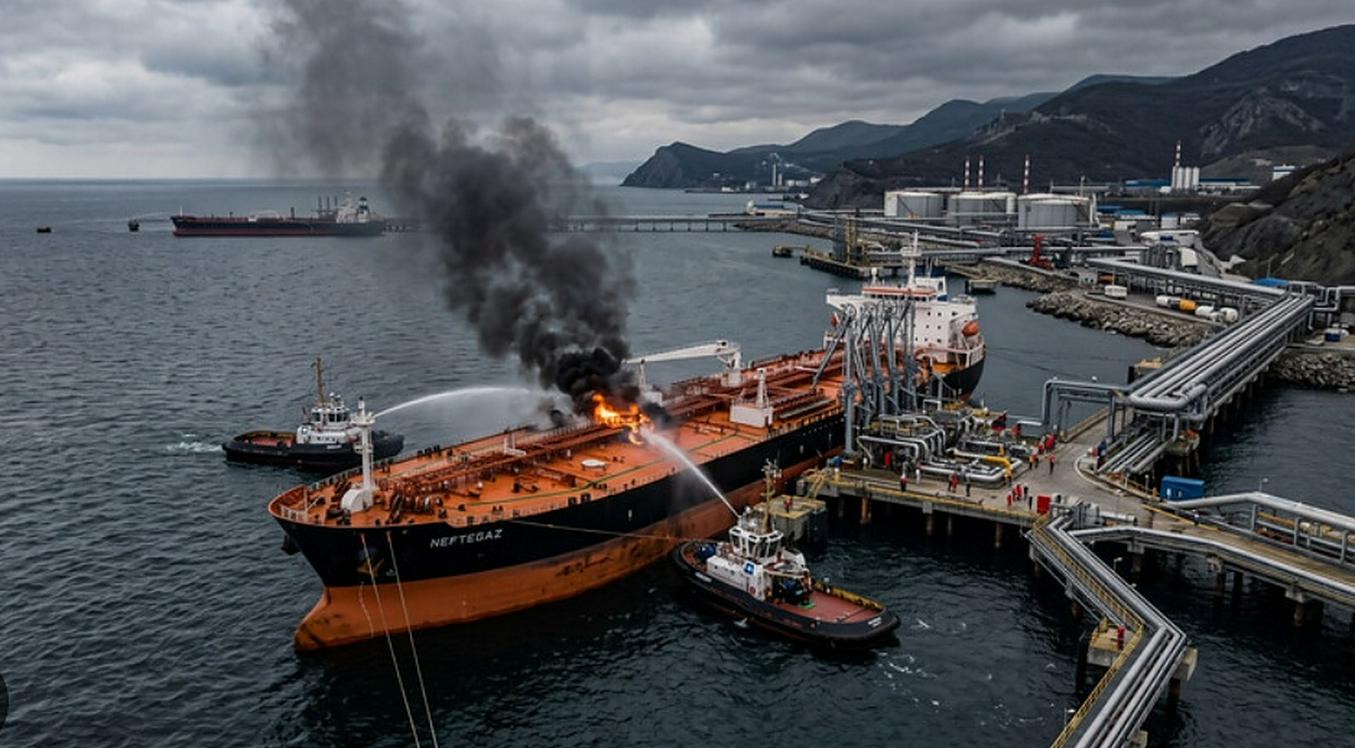
The U.S. administration has warned Ukraine against striking tankers not belonging to Russia in the Black Sea, after Chevron CEO Mike Wirth appealed to U.S. authorities over concerns about the company's oil projects in Kazakhstan. The Wall Street Journal reported the development, citing people familiar with the discussions.
According to the newspaper, Wirth discussed with Trump administration officials this week the consequences that Ukrainian strikes in the Black Sea could have for Chevron's oil assets in Kazakhstan. The trigger was attacks by Ukrainian naval drones on four tankers near the Russian port of Novorossiysk, one of which was chartered by Chevron. Oil exports via the Caspian Pipeline Consortium (CPC), which is partly owned by Chevron and carries about 2% of the world's daily oil output, pass through this port. Following the attack, shipments through the terminal were curtailed, forcing Kazakhstan to cut production.
Per the Journal, after consulting with oil companies, Washington made clear to Kyiv that strikes on vessels not belonging to Russia are unwelcome. A U.S. official said the administration views the CPC as a critical route for supplying Kazakh oil to Europe, helping reduce European countries' dependence on Russian energy.
Chevron holds a 15% stake in the CPC and owns 50% of Kazakhstan's largest oil field, Tengiz, which accounts for roughly 12% of the company's global output. Analysts say that if disruptions to exports via Novorossiysk persist, Chevron's limited storage capacity will likely force the company to cut production at the field.