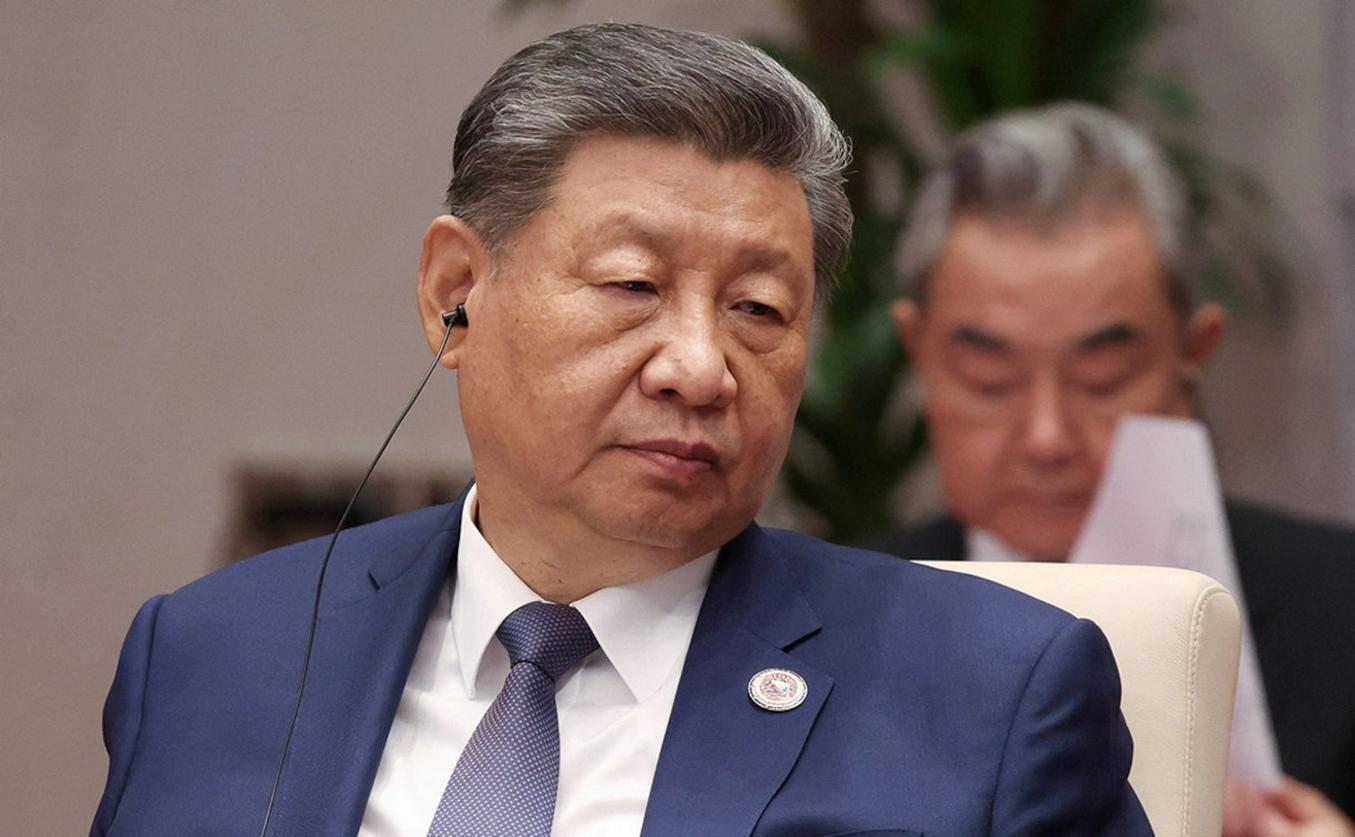
President of the People's Republic of China Xi Jinping said the Shanghai Cooperation Organization should take a more active role in shaping the regional and global order. Speaking on September 1 at the SCO heads-of-state summit in Bishkek, he proposed that the organization become a platform for advancing Chinese initiatives on development, security, civilizational dialogue and global governance, Xinhua reports.
Xi's speech, delivered in the year of the SCO's 25th anniversary, was framed as a program for expanding the organization's role. The Chinese leader recalled that the SCO was created after the Cold War as a mechanism to protect the sovereignty, security and development interests of the region's states. Today, he said, it has become the largest regional cooperation organization in the world by territory, population and development potential.
At the same time, Beijing is pushing to position the SCO as more than a regional format. Xi described a world where rivalry is intensifying between dialogue and confrontation, multilateralism and unilateral action, mutual benefit and «zero-sum» policies. In such circumstances, he said, the SCO must «assume historical responsibility» and «actively steer the course of history."
China's agenda rests on four pillars. The first is the economy. Beijing intends to deepen SCO cooperation in trade, investment, transport connectivity, energy and natural resources, as well as artificial intelligence, the digital economy, green industry and critical minerals.
Xi described the SCO as a priority region for advancing the Belt and Road Initiative and the Global Development Initiative. Over the next three years, China plans to carry out 100 joint scientific and technological projects with SCO member states. Beijing also pledged to keep building new solar and wind power plants with a combined capacity of 10 million kilowatts each, establish an international cooperation center for AI applications, and open a China-SCO port economy cooperation center in Tianjin.
Separately, Xi invited SCO states to join China's «Common Big Market — Export to China» initiative, underscoring Beijing's intent to use the scale of its own market as a tool of political and economic attraction. China also backed efforts to improve the efficiency of the Trans-Caspian International Transport Route, which links China to Europe via Central Asia, the Caucasus and the Caspian Sea.
The second pillar is security. Xi called on SCO states to jointly combat terrorism, separatism and extremism, transnational crime, drug trafficking and telecom fraud. He also proposed deepening cooperation on information, biological and space security, and countering outside interference in the internal affairs of regional states.
Beijing wants the SCO to become a key platform for its Global Security Initiative. Xi backed the swift launch of four SCO security centers meant to strengthen member states' capacity to respond to shared threats.
The third pillar covers humanitarian ties and «civilizational dialogue.» China intends to expand cooperation among parliaments, political parties, universities, think tanks, businesses and media. It will establish a China-SCO basic education cooperation center and continue using its network of Confucius Institutes and Luban Workshop vocational schools to deepen humanitarian contacts.
Finally, Beijing proposed that the SCO play a role in reforming global governance. Xi called for equality between large and small states, resolving regional disputes through consultation, and a stronger role for the UN. He welcomed the expansion of SCO partnerships with «like-minded parties» and voiced readiness to coordinate positions on the war in Ukraine, the conflict in the Middle East and the situation in Afghanistan, in pursuit of political settlements.
In short, China presented the SCO not merely as a platform for Eurasian cooperation, but as one of the tools for building a multipolar world order — an alternative to the model Beijing associates with unilateral Western influence. In this logic, economic projects, infrastructure, security cooperation, educational exchanges and diplomatic coordination all become elements of a broader Chinese strategy: expanding its own international influence by anchoring itself among the states of Central, South and part of East Eurasia.