Uzbekistan's President Shavkat Mirziyoyev on June 11 signed a law that for the first time sets out, at the legislative level, how strikes may be declared, conducted, and ended — and introduces liability for breaking the new rules.
The law amends the Criminal Code, the Code of Administrative Liability, the Code of Civil Procedure, and the Labor Code, as well as the laws «On Public Associations» and «On Trade Unions.» It takes effect three months after official publication.
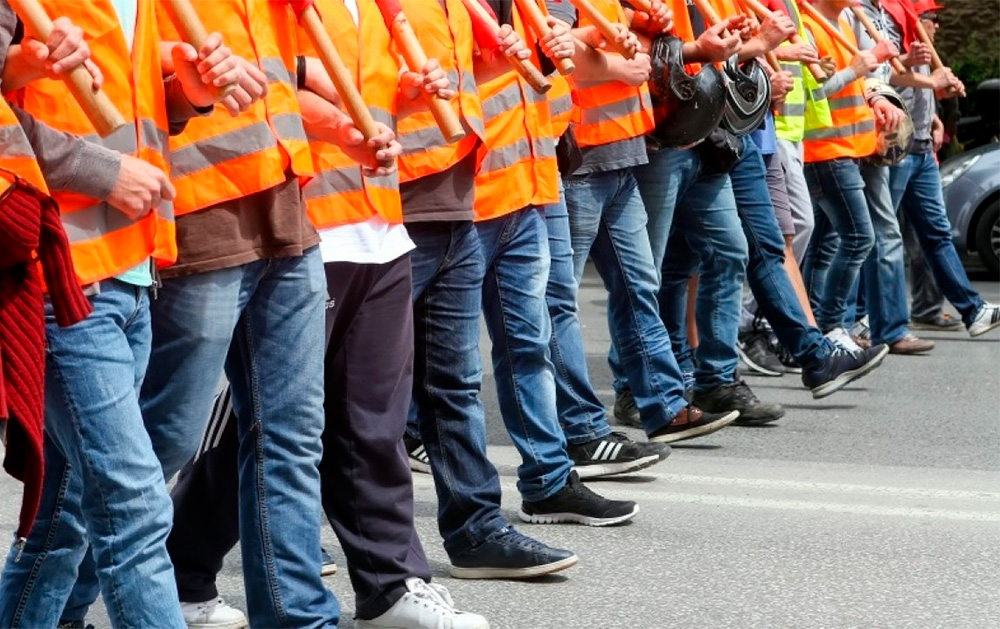
The Labor Code now defines a strike as a temporary, voluntary, joint full or partial refusal to perform work duties, undertaken to protect workers' labor, socio-economic, and professional interests and to resolve a collective labor dispute with an employer.
The right to strike arises only after conciliation and mediation procedures fail. A strike is also permitted if the employer refuses these procedures or breaks an agreement reached during the dispute.
Participation is voluntary. The decision to strike must be taken no later than one month before it begins, at a general meeting of employees proposed by the trade union committee. At least half the workforce must attend, and at least 50% of those present must vote in favor. The decision must list the disagreements, the date, time, and place of the strike, and the strike leader's identity and authority.
The trade union committee must notify the employer in writing within one working day of the decision. The employer must then notify the state bodies handling collective labor disputes within the same period.
The trade union committee appoints the strike leader, who may convene meetings, obtain relevant information from the employer, engage specialists, and suspend the strike with the consent of more than half the participants. The leader must uphold the Constitution and the law, work toward a peaceful resolution, and provide no false information.
Worker guarantees and limits
Striking cannot be grounds for disciplinary action, and employees keep their jobs and positions, though wages need not be paid during the action.
Strikes are banned during a state of emergency, emergency situations, war, or general mobilization. Medical workers, military personnel, judges, and employees of energy and water supply, communications, judicial, and law enforcement bodies may not strike.
In organizations that sustain society's life support — energy and water supply, transport, communications, healthcare, social security, and continuous production — a strike is illegal unless a minimum level of essential work or services is maintained. The government will define the list of such works and organizations within three months of publication.
A court may postpone an announced strike or suspend an ongoing one for up to 30 calendar days if there is a real threat to people's life and health. The court's decision takes effect immediately.
A strike ends when the parties reach a written agreement, the employer resolves the disputes, a court declares the strike illegal, or more than half the participants vote to cancel it. Afterward, employees must return to work no later than the next working day.
Penalties for violations
The Code of Administrative Liability sets fines for taking part in a banned strike of three to seven basic calculation values (BCV, currently 412,000 soums, about $34), and 10 to 15 BCV for leading one. Coercing someone to join or refuse a strike carries a 15-to-30 BCV fine, rising to 30–50 BCV if directed at a dependent person.
The Criminal Code adds Article 218¹ with harsher penalties. Leading an illegal strike or coercing participation after an administrative penalty is punishable by a fine of 100 to 300 BCV, up to 360 hours of compulsory labor, or restriction or imprisonment for up to three years. If such acts cause major damage, death, or other grave consequences, the term rises to two to five years.
Separate liability applies to coercion or leadership where a strike is legally prohibited — restriction or imprisonment of three to five years, rising to five to ten years if the act causes death or other grave consequences.
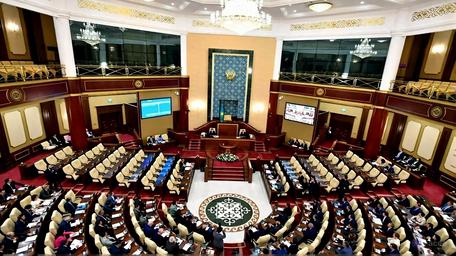
The Legislative Chamber of the Oliy Majlis adopted the law on September 10, 2025, and the Senate approved it on April 8, 2026. Its preamble states the goals of strengthening labor-rights guarantees, aligning national law with international standards, and improving how workers express and protect their socio-economic interests.